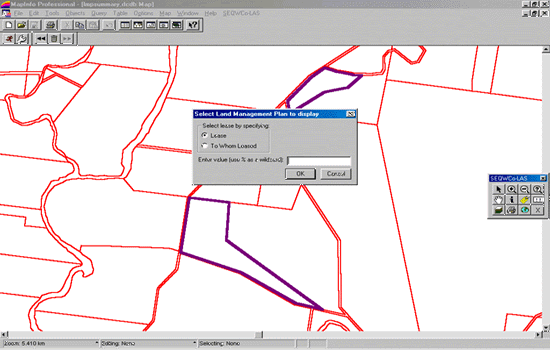
A computer based Geographic Information System (GIS) enables data to be recorded and stored with a geographic location so that it can be displayed in map form. Points, lines and discrete areas such as map units can be stored in computer files and displayed online or printed as hard copies. This allows any descriptive information from one database to be displayed in a geographic format and to be associated with information from other databases.
A GIS is very effective tool in land resource assessment and management. Soils, landforms and vegetation can be mapped in the GIS and displayed at varying scales. Separate maps of land use, clearing and land degradation can be intersected with the land resource maps to show which land uses, the extent of clearing or degree of erosion occur on different land resources. Point data such as potential pollution sources and monitoring bores can be displayed on top of the resource maps. All of these maps can be overlain on a cadastral database to show the distribution of these features with respect to land tenure and ownership.
As well as visual overlays, a GIS enables data base information to be sorted and queried with the results being either tabulated or graphed. Information from different databases can be compared to produce maps, tables and graphs of combined features.
Land management data bases can be designed to integrate land administration records such as tenure, ownership and land use with natural resource information to provide a computer based administration system that enables land managers and planners to monitor land management and plan for future requirements.